


Risk incident rate
Before: Moderate
After: Very low
Major reduction
Safer automation
Added risk scoring, reviewer queues, and auditable approval checkpoints.
Risk incident rate
Before: Moderate
After: Very low
Major reduction
Approval turnaround
Before: 45 min
After: 11 min
-76%
Audit completeness
Before: Partial
After: Comprehensive
Compliance-ready
Section 1 - Client Problem
Section 2-3 - Context and Goal
A regulated services team needed to retain AI speed benefits while enforcing approvals for policy-sensitive operations.
Implement a human approval gate for high-risk actions with clear review context, SLA tracking, and auditable outcomes.
Section 4-5 - Workflow and Architecture
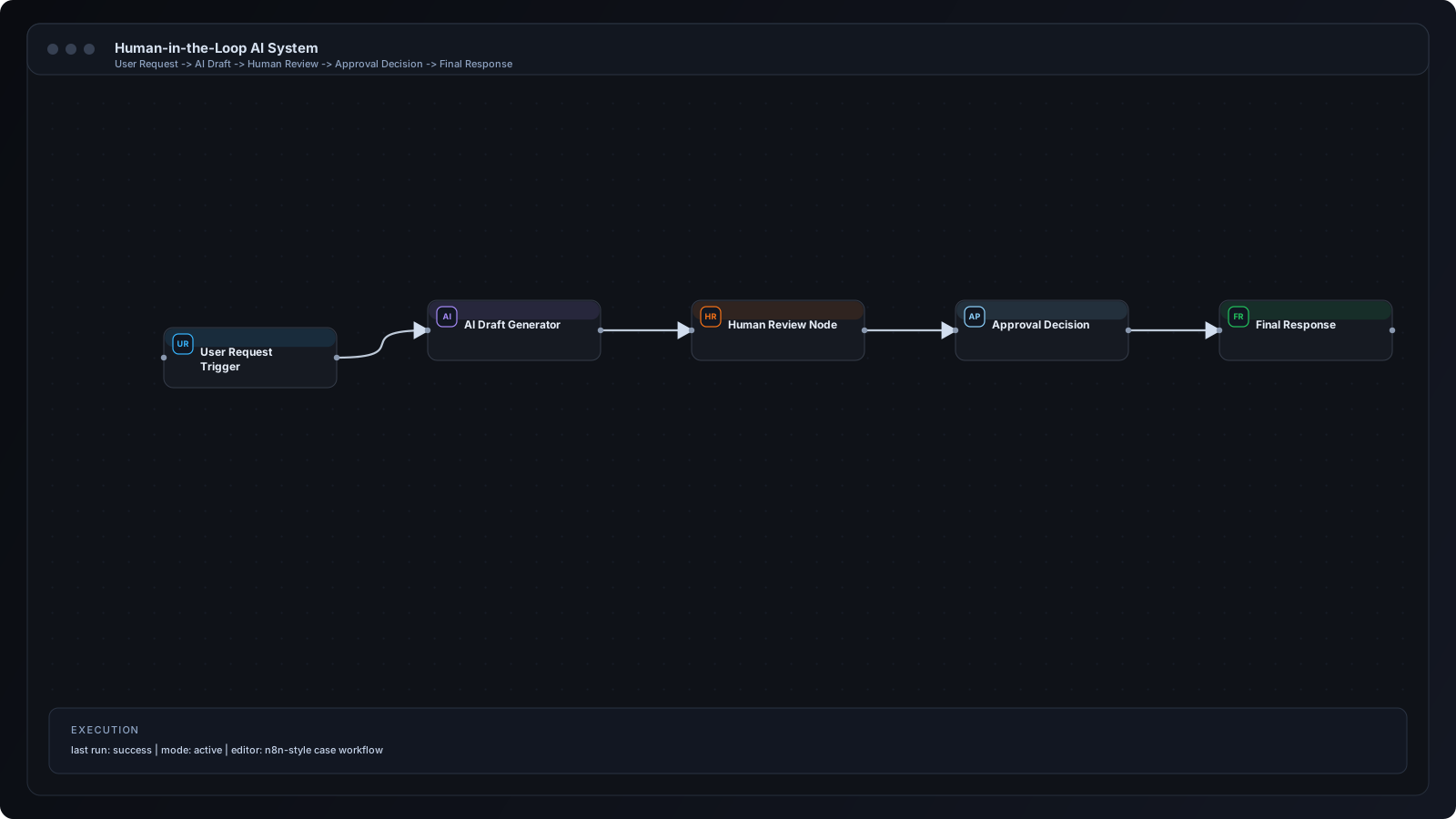
Risk scoring layer with human checkpoints and compliance-grade logging.
Recommended diagram: AI Draft -> Risk Score -> Approval Queue -> Reviewer Decision -> Execute / Reject -> Audit Log.
Section 6 - Step by Step Workflow
Step 1
AI suggests an action based on incoming event context.
Step 2
Risk engine scores action against policy rules.
Step 3
Low-risk actions continue automatically.
Step 4
High-risk actions enter approval queue.
Step 5
Reviewer receives context packet with recommendation details.
Step 6
Reviewer approves, edits, or rejects action.
Step 7
Approved actions execute and logs are stored.
Section 7 - n8n Breakdown
OpenAI Node
Creates suggested response or action.
Function Node
Applies risk and policy scoring.
IF Node
Routes by risk level.
Slack/Telegram Node
Requests reviewer decision.
Wait Node
Holds execution until review event arrives.
Execution Node
Runs approved downstream action.
Data Store Node
Stores reviewer identity and decision history.
Integration icons and tooling used in this implementation.
 OpenAI
 n8n
n8n Slack
Slack Telegram
Section 8 - Results and Metrics
| Metric | Before | After | Impact |
|---|---|---|---|
| Risk incident rate | Moderate | Very low | Major reduction |
| Approval turnaround | 45 min | 11 min | -76% |
| Audit completeness | Partial | Comprehensive | Compliance-ready |
Section 9 - Implementation Challenges
Designed compact approval payload with key facts, risk score, and source links.
Added SLA timers and escalation to backup approvers.
Stored immutable approval logs with user IDs and timestamps.
Section 10 - Lessons Learned
Section 11 - FAQ
Yes. Multi-level approvals can be configured by action class.
Escalation policies can notify backup reviewers or pause execution safely.
Yes. Approval gates can sync with Jira, Zendesk, and internal systems.
Yes. Rejection reasons feed into iterative AI prompt and policy tuning.
Share your workflow stack and current bottlenecks. We will design a practical automation architecture with implementation priorities.